Funeral de
emargencia

A Brief Talk on Buddhism

Amida's Infinite Memory: Where Our Existence Never Fades


Amida's Infinite Memory: Where Our Existence Never Fades

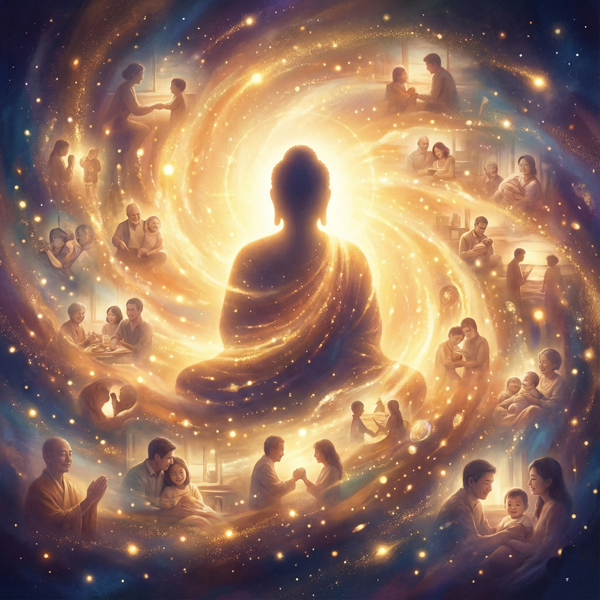
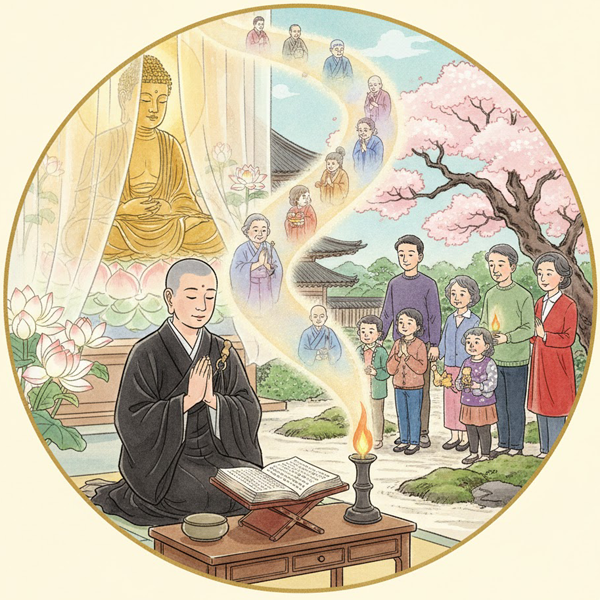
Good afternoon, everyone. Our Amida Buddha is like a "great and infinite memory" that embraces us forever, without ever forgetting us. How do we feel that we have a place where we belong in this world? We feel this when we remain in someone's memory, when we are remembered by someone.

However, with the passage of time, all of us will eventually be forgotten. A day may come when humanity itself is no longer here, and we may feel the fear that all traces of our existence will disappear. We all carry, somewhere in our hearts, this loneliness and insecurity. But the Buddha's memory never fades. Even if we are forgotten by the world, the Buddha never forgets us.

The Buddha knows not only the life we actually lived, but also our regrets, the choices we did not make, and even the joys that could have happened if we had followed another path. The image of a life that could not be born growing up in good health, or the life of someone who departed young and who, if they had lived longer, would have achieved happiness. The Buddha understands even those happy memories that we, here, cannot touch.

Our joys, our sufferings, and even our unfulfilled desires, everything lives forever within the Buddha's heart. To be embraced entirely within this loving memory of the Buddha — this world of absolute peace is "O-Jodo," the Pure Land, where we will go at the end of our journey.

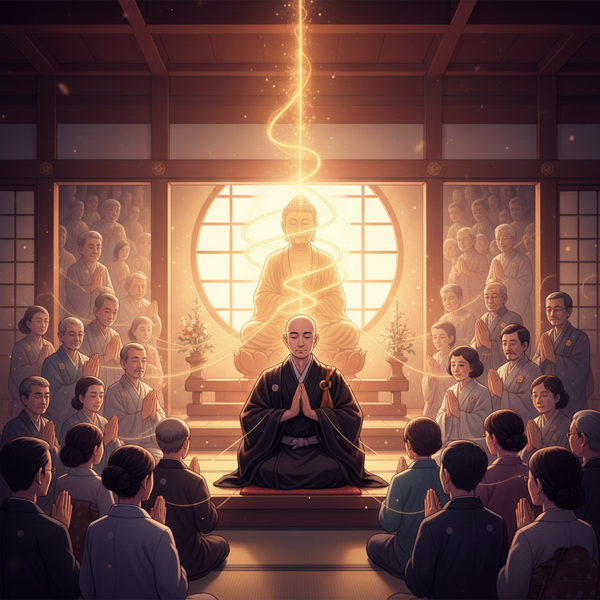
Today, we gather to remember and honor those who departed before us. Both we and they are beings who, in the long history of time, will one day be forgotten. But, within the Buddha's heart, that person's smile, the time we spent together, and even the future that person wished to live, everything continues to be kept with infinite affection. Long before we try to stretch out our hands in search of salvation, we are already enveloped by this immense compassion of the Buddha, who never forgets anything or anyone. Thank you.
Rev. Josuke Inoue (釋 穣信)

Resident Minister, Honpa Hongwanji Mogi das Cruzes

Kaikyoshi — Jodo Shinshu Hongwanji-ha, South America District

↑ Back to index

Hoonko: The Encounter That Unites Ancestors, Future, and Buddha's Presence


Hoonko: The Encounter That Unites Ancestors, Future, and Buddha's Presence

Today, we observe the Hoonko service, the most significant ceremony of our Jodo Shinshu tradition, honoring our founder, Shinran Shonin, and our departed loved ones. Hoonko literally translates to "A Gathering of Grateful People." Many of us occasionally wonder what it truly means to step into the temple and join a memorial service. Today, I want to share with you how much your presence and devotion carry a vital meaning for the future of our world.

First, let us contemplate how this path began through the compassion of Shinran Shonin. When he established our teachings, and when the masters of succeeding generations formalized our Hoji services, their actions were guided by a deep and profound care: "Let us preserve a path of universal salvation that functions flawlessly for all eternity." Thus, Hoonko stands as the very origin of our memorial traditions in Jodo Shinshu, representing Shinran Shonin's great project of compassion to bring absolute peace of mind to everyone in the future.

The power of Amida Buddha, our focus of devotion, is not a magical force, but the "Sacred, Unseen Power of Connection That Binds People Together." The mutual support and harmony that blossom during temple activities are beautiful expressions of the Buddha's compassion, a presence that already surrounds us everywhere. Shinran Shonin brought this intent of Amida Buddha into the world as a practical, living teaching. Therefore, we express our gratitude (Hoon) by touching this boundless compassion of Amida Buddha through our participation in the Hoji service.

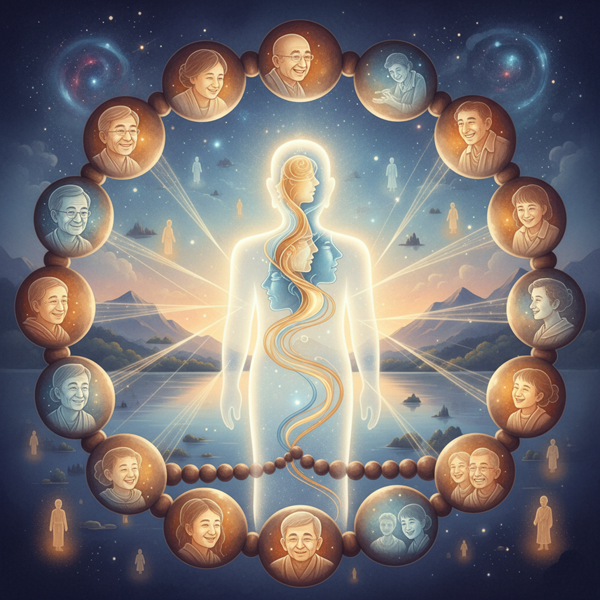
How then does this act of gratitude connect with the deep longing we hold for our departed loved ones? To understand this, let us reflect on our own existence. **The "I" who stands here right now** is not an isolated individual. You are a unique space where our departed ancestors and the future lives yet unborn exist simultaneously. These lives are not physically present, but they harmonize perfectly within your being.

The true meaning of the Nembutsu—"Namu Amida Butsu"—that Shinran Shonin passed down to us was never meant for isolated, individual salvation. Your choice to visit the temple today means you are actively anchoring the peace of your ancestors and securing the well-being of all who will inhabit the future. Nothing is separate; everything is interconnected. Your participation is a noble act that embraces not only your family but the entire future of our world. The Buddha is the eternal presence binding all lives around us. Your presence in this service is the ultimate expression of gratitude to Shinran Shonin, who showed us that you, your ancestors, and all future generations are eternally linked within this embrace. Namandabu.

Rev. Josuke Inoue (釋 穣信)

Resident Minister, Honpa Hongwanji Mogi das Cruzes

Kaikyoshi — Jodo Shinshu Hongwanji-ha, South America District

↑ Back to index

Eitaikyo: The Relay of Life in Gratitude


Eitaikyo: The Relay of Life in Gratitude

Good afternoon, everyone. It is with great joy that we welcome you to this Eitaikyo service, our traditional ceremony for the perpetual transmission of the Dharma. Today, we dedicate our time and reverence to the Buddha's teachings which, like a clear light, continue to guide us as we honor the memory of those who have passed away. Eitaikyo is a precious moment of profound gratitude, a time to recognize that the light of the Dharma will illuminate our path now and forever.

Through saying goodbye to our beloved ones, we are gently reminded that this earthly life is not eternal. Everything in this world exists in a state of constant transition; nothing remains identical. The very essence of the universe we inhabit is this continuous change. There is no permanent physical life here, meaning that one day every single one of us will face the transition we call death. This is why we feel such deep appreciation and attachment to this fleeting moment called "now." We experience a quiet anxiety about where the love filling our hearts—this deep affection for someone so precious—will go after death. Yet, even this attachment and anxiety are warmly embraced by the light of Amida Buddha, and a realm of absolute and unshakeable peace awaits our arrival.

In many religious traditions, people express their gratitude for divine blessings by offering their finest material possessions. On our Buddhist path, and especially during Eitaikyo, our way of receiving and expressing this gratitude is beautifully unique. We welcome our departed loved ones into our hearts as those who have already attained Buddhahood. We believe that the greatest gift these Buddhas have left behind for us is the precious time we spent together in this world. And we who remain remember with immense fondness the warm memories, the wisdom, and the journeys shared with them.

To preserve their presence within our memories—which is the temporary home we offer them—and to share their stories continuously is the highest expression of respect and gratitude we can offer. The term Eitaikyo literally signifies that the warm affection of those who remember the deceased will remain eternally in this world, long outlasting their physical lifespans. This devotion acts like a sacred relay stick passed from life to life, delivered with care to the next generation and into the future. This ceremony is a celebration of gratitude for the profound interconnectedness of all life. It is an act of great nobility, born from this active compassion, to maintain the flame of the Dharma forever. May the thought, "I am living this life with deep value," resonate within the hearts of everyone gathered here today. Namandabu.

Rev. Josuke Inoue (釋 穣信)

Resident Minister, Honpa Hongwanji Mogi das Cruzes

Kaikyoshi — Jodo Shinshu Hongwanji-ha, South America District

↑ Back to index

What Are We?


What Are We?

What exactly are we? We experience waves of happiness and depths of sorrow, and although our emotional landscape shifts from moment to moment, our core sense of "self" endures. Our hearts have the boundless capacity to hold all these diverse emotions. This inner landscape, which feels uniquely personal, is actually a shared space that defines your true existence.

You represent a sacred crossroads where your ancestors—who have departed and live on through your memories—and your future descendants—who are yet unborn—meet in perfect unison. The past and the future, which can never physically coexist, intersect dynamically within you. Life is an unbroken thread passed down directly from your lineage, and it is through your existence that this vital thread will extend to the generations to come. You are never truly isolated; your very being is built upon the presence of others.

In Buddhism, we regard the sacred mindfulness beads, the Nenju, as a profound teaching tool. Consider the individual beads: each bead features a central hole, but that hole only gains its functional existence because it is surrounded and defined by the material of the bead itself. The beads touch, support, and sustain one another. You are very much like that central opening. Your form, character, and personality are continuously shaped by the individuals around you—your family, friends, and neighbors. They give your life its true context and meaning. Yet, it is the opening itself that allows the string to pass through, binding all the beads together in unity.

Of course, this human circle is always changing. Beloved companions depart from our sight, while new encounters arrive. Do those we lose simply vanish into nothingness forever? We naturally feel a heavy void, a quiet absence. What we must deeply realize, however, is that within the profound sorrow of loss, something vital remains completely untouched. It is not the physical person, but their love. The love of those who have passed before us continues to dwell within you, preserved in your warm memories. This love never expires; it remains anchored in your being, turning the empty void into a source of enduring inner warmth.

The Buddha teaches us that this remaining love transforms into an even more powerful spiritual force called compassion. Thus, grief is not an enemy to be feared; it becomes a sacred opportunity to awaken to this inner power. The deep empathy you experience through loss can be transformed into the very compassion you extend toward others. You can choose to make this active compassion a core part of who you are, spreading kindness to those around you. Transforming sorrow into genuine gratitude and gentleness is the true path. It is the most sublime way to honor those who have passed while simultaneously living a richer, more meaningful life. We do not exist in isolation; we are a vibrant web of connections. This enduring bond, which remains unbroken even through loss, is the saving wisdom that completes our lives.

Rev. Josuke Inoue (釋 穣信)

Resident Minister, Honpa Hongwanji Mogi das Cruzes

Kaikyoshi — Jodo Shinshu Hongwanji-ha, South America District

↑ Back to index

The Light of the Chochin: A Sign from the Heart


The Light of the Chochin: A Sign from the Heart

Welcome, everyone, to this sacred Obon service. Please take a moment to look around our main hall, filled with the warm glow of these many chochin lanterns. Each lantern stands as a clear testament to your sincere cooperation and devotion. Yet, these lights carry an even deeper spiritual meaning, which we shall reflect upon together during today's ceremony.

Every one of us walks through life carrying a quiet, hidden void within our hearts. A child can cry out loud to release their grief, but as adults, we tend to lock our sadness and sense of loss deep inside, trying to appear strong. However, accumulated pain eventually overflows, breaking down our inner walls. This temple is a sanctuary where you can safely expose that pain and allow it to heal in absolute peace.

"I am thinking of you; please look my way." This profound longing lives within all of us as we strive to reach our departed loved ones. Yet, no matter how intensely we listen, their reassuring voice saying, "I am watching over you," cannot be heard by our physical ears. To bridge this silent divide, generations before us poured their hearts into creating these lanterns. A chochin is a heartfelt signal from us, waving our hands to the departed and saying, "We are right here!"

You might wonder why we continue to preserve this old lantern tradition today. This custom is a warm testament of love for our ancestors that has been kept alive without interruption for centuries. Even when the world faces turmoil, and even when our home shifts to a distant, foreign land, we have strictly guarded this heritage. These lanterns are not mere festive decorations; they are a vital bridge connecting our hearts to our ancestors, and extending that sacred bond to the future.

Perhaps you have not encountered this perspective before. Yet, as I contemplate the Jodo Shinshu teachings and share in your hearts' journeys, I hold this absolute conviction. I deeply wish for everyone who visits this temple to find real comfort and tranquility. I carry the responsibility to walk this path hand-in-hand with you. In modern society, it has become difficult to speak openly about encountering our deceased loved ones within our hearts, but here at the temple, you are free to say it. Everyone gathered here carries that identical unspoken longing. Please feel completely at ease, and meet the person most precious to you within the quiet sanctuary of your mind.

Your sacred contributions have been beautifully transformed into these lanterns, ensuring that this vital teaching is passed securely to the next generation. The Buddha never abandons a heart that seeks connection. As long as our ancestors remain alive in our memories and Amida Buddha's infinite compassion embraces us, we can live each day with peace of mind. Let us give thanks for this precious encounter.

Rev. Josuke Inoue (釋 穣信)

Resident Minister, Honpa Hongwanji Mogi das Cruzes

Kaikyoshi — Jodo Shinshu Hongwanji-ha, South America District

↑ Back to index

The Light of Amida's Compassion and Reunion in the Pure Land


The Light of Amida's Compassion and Reunion in the Pure Land

Good afternoon, everyone. Today, we gather before the altar of Amida Buddha for this service, a sacred time of encounter. When we join our hands in Gassho, we are not merely performing a ritual habit; we are opening our minds to receive the light of infinite compassion, remembering our departed loved ones with profound respect and gratitude.

Within our Jodo Shinshu tradition, we awaken to a liberating truth: we are not saved by our personal merits, our own goodness, or our strenuous efforts. We are all deeply imperfect beings, known as "bombu," carrying our anxieties, doubts, fears, and mistakes. Yet, the boundless light of Amida Buddha shines upon each of us exactly as we are, demanding absolutely nothing in return. Amida's Primal Vow is an unshakable promise that no one, without a single exception, will ever be abandoned.

When we recite the Nembutsu, "Namu Amida Butsu," we are not begging for salvation or trying to accumulate religious credit. The Nembutsu is the very compassion of Amida Buddha becoming voice through us. It is our response of deep gratitude—a simple, heartfelt "thank you" for being unconditionally accepted and embraced just as we are.

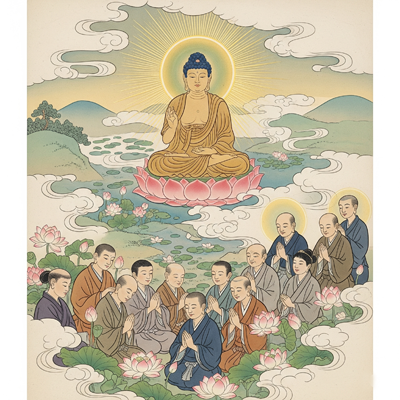
Our departed loved ones have not vanished into a distant, unreachable void. They have already been born into the Pure Land (Jodo), the realm of ultimate light and wisdom, where all worldly suffering ceases and where they have attained Buddhahood. From that peaceful realm, they do not merely rest; they surround us with their wisdom and serenity, watching over and guiding our steps. And we hold the absolute certainty that when our own earthly journey concludes, we will be welcomed into that exact same Pure Land.

Therefore, this memorial service is not a sorrowful farewell, but a joyful celebration of our spiritual reunion in the Buddha's light. It reminds us that the deep bonds connecting us are beautifully woven by Amida's compassion, completely transcending the boundaries of life and death. Let us walk through our daily lives with the profound peace of mind and immense gratitude that come from placing our complete trust in Amida's Vow. Namandabu.

Rev. Josuke Inoue (釋 穣信)

Resident Minister, Honpa Hongwanji Mogi das Cruzes

Kaikyoshi — Jodo Shinshu Hongwanji-ha, South America District

↑ Back to index

The Essence of Jodo Shinshu: Love, Connection, and Hope in Brazilian Land


The Essence of Jodo Shinshu: Love, Connection, and Hope in Brazilian Land

Good afternoon, everyone. Thank you, as always, for your kind and constant attention. The Dharma talks of our Jodo Shinshu tradition consistently convey deep messages regarding how we ought to live our daily lives. Today's service marks a truly memorable milestone, commemorating the historical arrival of the first Japanese immigrants to Brazil and the very beginning of our Jodo Shinshu activities on this land. On this meaningful occasion, I would like to speak to you about the core essence of our teachings.

At the absolute center of our path lies the infinite and profound compassion of Amida Buddha. Amida Buddha embraces and saves all people equally, without a single exception, guiding every being safely to the Pure Land. We are assured that when this present life reaches its end, we will not be left to wander alone in darkness; rather, we will be warmly welcomed into a realm of eternal peace. This ultimate salvation does not depend on our imperfect self-powered efforts, but flows entirely from the great compassionate power of Amida. To recite the Nembutsu, "Namu Amida Butsu," is the natural act of accepting this boundless mercy and experiencing our profound spiritual connection with the Buddha.

Furthermore, we cherish our continuous connection with those who have passed before us. Through sacred gatherings like today's service or during the season of Obon, we turn our thoughts to the deceased to express our deep and sincere gratitude. To remember them is not merely to grieve their physical absence; it is an opportunity to reconfirm the unconditional love and wisdom we received from them, transforming those memories into a source of daily strength. Their life examples and legacy continue to dwell vibrantly within our hearts, destined to be passed down carefully to the next generation.

Our teachings are also firmly grounded in the universal truths of impermanence and interconnectedness. Amidst the continuous flow of encounters and farewells that shape our human existence, it is vital that we awaken to the true value of our relationships and the profound oneness shared by all living beings.

Above all, Jodo Shinshu is a path that emphasizes a heart of mutual "compassion." Learning to genuinely rejoice in the happiness of others and to embrace their sorrows as if they were our own brings our minds into beautiful alignment with the heart of the Buddha. True fulfillment is never found in the narrow pursuit of our own isolated happiness, but in acting selflessly for the welfare of others. In our daily lives, let us practice gentle self-reflection, live with deep gratitude, and treat everyone with absolute sincerity. All of these practices guide us along the path of lucid confidence, living in the warm embrace of Amida Buddha's vow with the Nembutsu on our lips. This serene certainty grants us an unwavering hope and a profound peace of mind amidst the natural sufferings of life.

Rev. Josuke Inoue (釋 穣信)

Resident Minister, Honpa Hongwanji Mogi das Cruzes

Kaikyoshi — Jodo Shinshu Hongwanji-ha, South America District

↑ Back to index

The Life That Connects Us: Memory, Family, and Gratitude


The Life That Connects Us: Memory, Family, and Gratitude

Welcome, everyone. Today we celebrate Gotan-e, the birth anniversary of our founder, Shinran Shonin. This month of May, as reflected by the deep devotion embodied in the memorial tablets (ihai) you hold today, is a sacred time to remember our departed loved ones. Shinran Shonin passed down to us the boundless compassion of Amida Buddha, who embraces all beings unconditionally. This infinite grace transcends the limits of time and pours over every existence equally.

Today, let us reflect on the "bonds of life." When does a person's existence truly vanish from this world? It is not with the physical death of the body, but rather when there is no longer anyone left to remember them—when they are completely forgotten. Then, when does an existence begin? It does not start simply at the moment of birth, but much earlier. It begins within the warm anticipation and sincere wishes for happiness held by those awaiting their arrival. Life ends when it is forgotten, and it begins when it is deeply loved and wished for.

Our lives expand far beyond the boundaries of time. With our present self living in the "now" as the center, our ancestors and our future descendants exist simultaneously. The central anchor that connects these strands of life, reaching from the past into the future—especially the living memories of our departed family members—is the family. Gathering here with these memorial tablets in hand is an enduring testament of love for the deceased and a sacred vow never to forget. We engrave their names and hold them close in our daily remembrance. Sharing their stories, memories, and wisdom within the family means passing down an invaluable spiritual treasure to the next generation. Maintaining this daily practice of remembrance inspires us to live each day with sincerity, care, and dedication.

The vital importance of this continuity is beautifully illustrated by the pioneers (Issei) who journeyed from Japan. In the face of immense hardships, they persevered with steady, diligent effort to lay the foundations of their lives. This daily consistency is the very foundation for all future growth. Among us today are those who inherit the bloodlines of these ancestors, as well as those who have come to deeply love Japanese cultural values. The earnestness, honesty, compassion, and gratitude shown by our pioneers are not merely outdated customs; they are critical "roots" that transcend nations and cultures, essential for a fulfilling life. Becoming aware of these roots and living our daily lives with sincerity, attentiveness, and gratitude enriches our community and illuminates our paths. Walking forward with stability is the highest expression of gratitude we can offer to those who have passed, bringing them true peace.

Shinran Shonin revealed to us that we are all unfailingly embraced by Amida Buddha. The light of Amida's compassion pours equally upon our ancestors, upon us who live in the present, and upon the future generations of children. To keep our departed loved ones alive in our hearts, to give thanks for our family lineage, and to walk forward into the future treasuring each day—within these actions lies a way of living that perfectly responds to the compassionate wish of Amida Buddha. When we recite the Nembutsu, "Namu Amida Butsu," we experience a profound connection with our ancestors and with Amida Buddha, filling our hearts with immense gratitude. May you carry the blessings of today's encounter in your hearts, maintaining your devotion to remember your loved ones and your determination to live each day with sincerity. This enduring continuity will sustain us and grant us the strength to make this land an even better place. Thank you very much for your presence today.

Rev. Josuke Inoue (釋 穣信)

Resident Minister, Honpa Hongwanji Mogi das Cruzes

Kaikyoshi — Jodo Shinshu Hongwanji-ha, South America District

↑ Back to index

Life is a Succession of Farewells


Life is a Succession of Farewells

Good afternoon, everyone. In today's service, we celebrate the birth of Shakyamuni Buddha, the founder of Buddhism. As we honor the beginning of life, we also reflect deeply on its transience and the inevitabilidade of saying goodbye.

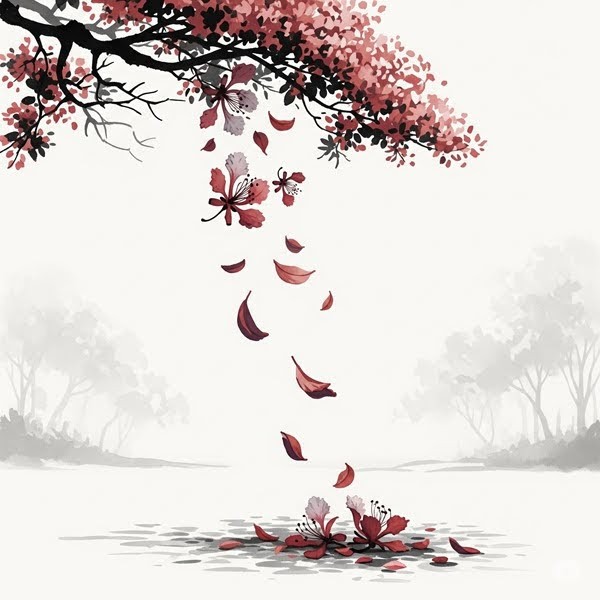
Life is a continuous flow of encounters and farewells, much like the beautiful cherry blossoms that bloom brilliantly and then scatter their petals in the wind. The bonds we form with those we love are deeply precious precisely because they are impermanent. Recently, we experienced a poignant farewell with the passing of a devoted temple member who supported us for many years as a community leader. This experience invites us to look within and contemplate the meaning of farewells in our own journeys.

We are surrounded by goodbyes of all kinds, from a simple daily parting to profound separations that leave a lasting mark upon the soul. Every farewell opens a space within us—a space filled with emptiness, gratitude, relief, or hope, beautifully reflecting the depth of the connections and experiences we shared.

Just as the cherry trees shed their petals to make way for new green leaves, people must follow their own destined paths. This is the natural order of existence, a universal flow that connects us to all things. The sorrow of parting brings real pain, which is nothing less than the echo of the deep love and value we dedicated to that person. The joy we once shared is transformed into invaluable memories, filtered through the gentle lens of nostalgia.

Physical absence, however, does not mean a true ending. In the presence of grief, let us gently embrace our sadness. Let us join our hands in silent prayer, seeking deep inner comfort and peace. (A brief pause)

In closing, I would like to share a traditional Japanese poem: [Accept this cup, a final toast of friendship, overflowing with my deepest feelings. Just as blossoms in their full beauty are scattered by the sudden storm, life itself is a succession of farewells.] May the profound beauty of our encounters and the enduring power of memory guide our steps. May every goodbye remind us of the precious time we shared, inspiring us to live each day with greater presence, intensity, and love. Thank you.

Rev. Josuke Inoue (釋 穣信)

Resident Minister, Honpa Hongwanji Mogi das Cruzes

Kaikyoshi — Jodo Shinshu Hongwanji-ha, South America District

↑ Back to index

Echoes from a Distant Land, the Song of Life


Echoes from a Distant Land, the Song of Life

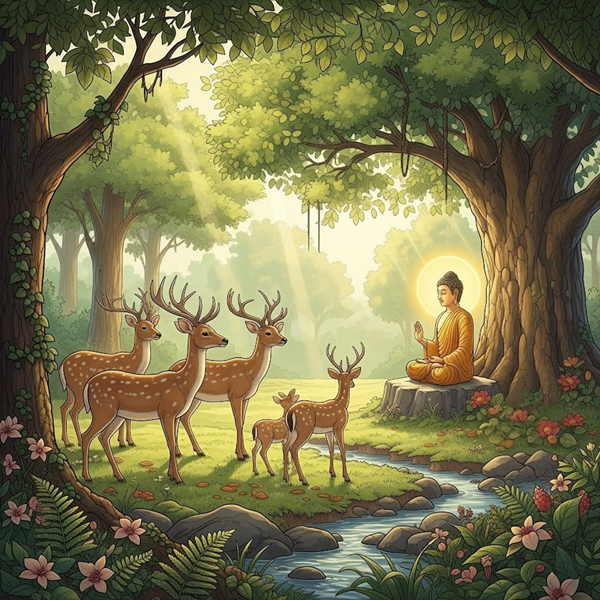
Let us travel in our minds to a peaceful forest of long ago, where deer gathered naturally. Once, in a lush forest of ancient India, there was a sanctuary where these gentle creatures assembled in quiet harmony. One day, beneath the shade of a sacred tree, a young seeker awakened to the ultimate truth of this world after deep and profound meditation. He began to speak of this truth to the deer surrounding him, as if whispering to dear companions. Generations later, people came to remember this beautiful event as "the First Sermon" in the Deer Park.

Why were deer present at the very dawn of the Buddha's teachings? In ancient India, the deer was regarded as a sacred and unique being. Unlike the mighty elephant, which often symbolized worldly power and physical strength, the deer represented stillness, grace, and the pure, untouched essence of nature. Perhaps the people of that age recognized in the deer a natural harmony with the universe and a state of complete inner peace.

The awakened young man described the nature of our reality in this profound way:
・"No phenomenon exists independently; everything exists only in relation to everything else."
・"All things are in a state of constant transition; nothing remains identical."
The world we perceive is like the continuous flow of a river, forever changing its shape, where every single element is deeply interconnected, constantly embracing and shaping one another.

The true essence of the one who embodies this truth—called the "Tathagata"—is this very nature of change and interconnectedness. The ocean waves, the blowing wind, the forest deer, and we humans are all precious, transient expressions arising and dissolving within this great, boundless flow of life.

What, then, does it truly mean to "listen to the Dharma"? It is far more than merely decoding words with our intellect. It means opening our hearts to the reality of the universe—understanding that all things change, that we are all profoundly connected, and that nothing lasts—feeling this truth deeply, and carrying it into our daily lives. The deer and other wild creatures, living in their natural state, are in a way already living in perfect harmony with this truth. We humans, however, often cling to our selfish desires and blind attachments, separating ourselves from this great connection. Thus, even though we possess a human form, our hearts can easily become restless, wandering without a home.

The young teacher who awakened to this reality was a human being just like us. He felt hunger and ate, felt weariness and rested, and experienced natural human feelings. Yet, he lived with a complete and beautiful acceptance of his humanity, cherishing the "Middle Way" that avoids all extremes. There is profound truth in simply living as we are, naturally and truthfully, just as the deer live their lives in perfect alignment with the rhythms of the earth.

The truth this young man shared, and the compassionate way of life that blossomed from it, eventually came to be called the "Dharma." This youth was Siddhartha Gautama, who became the Buddha, the founder of Buddhism. The Dharma is a compassionate teaching open to all living beings, transcending a narrow, human-centered view of the world to express the shared resonance of all nature. May this simple story bring a fresh, gentle breeze into your hearts today, and may that ancient sermon in the Deer Park echo across time and space, whispering to your soul as a warm call to seek the truth. Namandabu.

Rev. Josuke Inoue (釋 穣信)

Resident Minister, Honpa Hongwanji Mogi das Cruzes

Kaikyoshi — Jodo Shinshu Hongwanji-ha, South America District

↑ Back to index

A Mirror of the Soul


A Mirror of the Soul

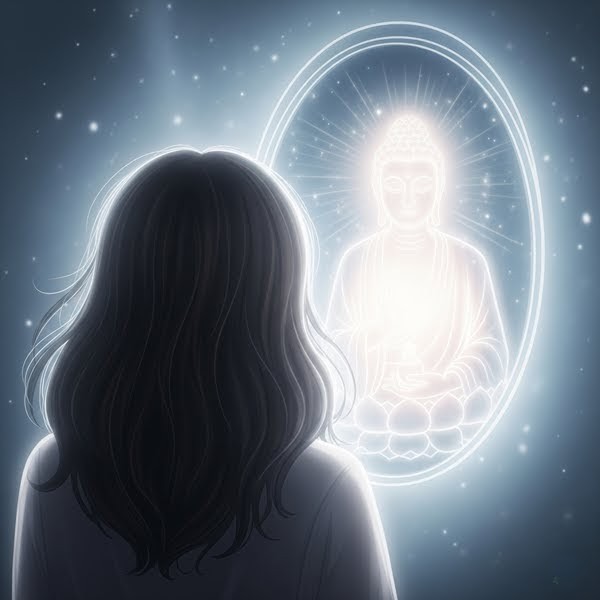
What kind of person are you? If you wish to know the answer, simply look closely into a mirror, for your true inner state reflects entirely upon your facial expressions. In the same way, the physical symptoms we experience mirror our daily life habits, and our involuntary gestures naturally reveal whether our soul dwells in a state of deep peace and serenity.

Those who live their lives experiencing genuine happiness tend to radiate a beautiful warmth through their daily greetings and smiles. Conversely, when a heart is captured by sorrow or misfortune, it becomes difficult to offer a cheerful greeting or to share a genuinely bright smile. While we must never judge others based on appearances alone, the subtle expressions on a person's face provide valuable insights into their inner character. The impact our appearance has on others—and on our own minds—is undeniably profound.

Since ancient times, those revered as sages have possessed the keen ability to look past outer forms and clearly perceive the unseen, true essence of a person. If our external appearance influences those around us, it has an equally powerful effect on our own state of mind. When your confidence begins to waver, stand up straight and correct your posture. When your heart feels heavy, look in the mirror and make a conscious effort to smile. If you wish to welcome happiness, be the first to extend a warm greeting. Even if it feels artificial at first, start by shaping your face into a gentle smile.

While this small act may not instantly solve the heavy problems you face, your kind smile might be the very light that lifts the heavy burden from someone else's heart. Choosing to put aside your personal concerns to offer joy and happiness to others is never a wasted effort, nor are you losing anything. Please never fall into the trap of thinking that you alone are suffering a disadvantage. There is an ancient truth that reminds us: "Even when no one seems to be looking, a sacred presence is always watching over you." Across different lands, this presence has been called "God" or "Buddha." Some cultures likened it to the great sun that warms the entire world, offering deep prayers of gratitude to its light. While this ultimate reality may remain invisible to our eyes, we in our Shin tradition call it "Amida Buddha"—the ultimate presence of compassion that always gazes upon you and celebrates your sincere efforts to sustain a smile for the sake of others.

Every human being naturally wishes to remain happy at all times. Yet, maintaining a continuous state of happiness is nearly impossible because everything in this world is in a constant state of flux and impermanence. Therefore, instead of clinging desperately to our own happiness, let us simply and purely wish for the happiness of all those around us. When every individual shifts their focus to wishing for the well-being of others, it ultimately means the entire world is wishing for your happiness as well. In Buddhism, we call this profound, unselfish mindset the "heart of compassion," and it encompasses the entirety of the Buddha's mind. Today, most of you have come to this temple to pray for the eternal peace and happiness of your departed family members. It is my deepest hope that through this beautiful act of love for your departed ones, you may naturally receive the Buddha's infinite compassion into your own lives. Namandabu.

Rev. Josuke Inoue (釋 穣信)

Resident Minister, Honpa Hongwanji Mogi das Cruzes

Kaikyoshi — Jodo Shinshu Hongwanji-ha, South America District

↑ Back to index

The Light in the Darkness


The Light in the Darkness

Ladies and gentlemen, a most cordial welcome to you all. Before long, the intense heat of summer will gently yield to the crisp air of autumn. As the seasonal transition can easily affect our physical well-being, please look after your health and live each passing day with care. Today, I would like to share a reflection on the two contrasting values that continuously coexist within our hearts: good and evil, the positive and the negative.

Sometimes, it is precisely because we find ourselves completely lost in the dark that the true beauty of a shining light becomes strikingly intense. This reminds us that within our daily lives, it is through enduring moments of deep pain and profound sorrow that we become capable of appreciating joy and happiness with far greater depth. Experiencing the devastating grief of losing someone we deeply cherish allows the simple warmth and vital importance of those who remain by our side to touch our souls in a uniquely profound way.

There are moments when happiness can seem like an incredibly distant reality, especially when we feel trapped at the absolute rock bottom of life. Yet, the universe remains vast and filled with countless unseen blessings that continuously cradle our existence. It is precisely when we feel we have reached the lowest depths that the world gently reveals to us just how wide it truly is, and how many beautiful possibilities—and paths of salvation—are quietly awaiting our discovery.

In our daily journey, we see, hear, and encounter many teachings. However, just as merely reading written characters does not mean we truly comprehend their ultimate, inner meaning, the fundamental truth of reality is constantly revealing itself to us—it may simply be that we are failing to pay attention. Too often, we are deeply confined by our own rigid perspectives and personal preconceptions, causing us to lose sight of the truth. The definitive answer may be resting directly before our open eyes, yet we simply fail to perceive it.

The compassionate teachings of the Buddha exist to grant us a vital "awakening" to see reality exactly as it is. This Dharma is not an extraordinary, esoteric philosophy found only in remote places; it has always been right by our side, quietly guiding our uncertain steps through the dark. Open your hearts gently and gaze at the reality around you. I am certain you will discover a warm, compassionate light that previously went unnoticed. This light of Amida Buddha will completely embrace you with its infinite warmth, illuminating the true path forward. I thank you from the bottom of my heart for the precious opportunity to share these sacred teachings with you today. Namandabu.

Rev. Josuke Inoue (釋 穣信)

Resident Minister, Honpa Hongwanji Mogi das Cruzes

Kaikyoshi — Jodo Shinshu Hongwanji-ha, South America District

↑ Back to index

Celebrating Life and Cultivating Memory


Celebrating Life and Cultivating Memory

Good afternoon, everyone. It is with heartfelt gratitude that we gather today to express our love and pay tribute to our departed family members. In preparing for this month's memorial service, I reviewed the list of our loved ones on the temple website and found 170 names registered for January alone. This served as a solemn reminder of how many precious lives concluded their earthly journey in just this single month. Of course, this list represents only a fraction of the many unique life stories and contributions that have shaped our world.

Human life is finite, and physical death is an inescapable reality for us all. It is completely natural that it brings profound grief and, at times, a sense of fear. But does death mark the absolute end of our existence? I firmly believe it does not. The indelible fact that a person existed, the unique moments shared, the gentle words exchanged, and the unconditional warmth we received from them—all of these remain vibrantemente alive within our hearts in countless beautiful ways.

We are naturally fascinated by the biographies of great historical figures, not only for their remarkable achievements, but because they reflect a universal human yearning: the desire to leave a lasting legacy and avoid being entirely forgotten. "How will I be remembered?" "How can I prevent my existence from fading away?" When faced with these anxieties, our initial instinct might be to ask others to remember us. Yet, perhaps the truest essence of life is found elsewhere. Rather than focusing on our own self-centered desires, the most meaningful path is to deeply appreciate the existence of every individual currently around us, while cherishing the memories of those who have passed and passing them gently to future generations.

A compassionate glance, a word of deep comfort, a sincere smile—may each of us seek out the profound beauty hidden within the small, everyday gestures of life and preserve them tenderly in our hearts. In this way, loving memories and sacred teachings are naturally transmitted across time, from generation to generation.

Throughout history, diverse religious traditions have arisen to comfort and guide humanity. Some may teach that it is enough to simply ask for our worldly desires to be fulfilled. However, within Jodo Shinshu Buddhism, what truly grounds us is pure compassion—the altruistic aspiration to serve others without expecting anything in return. Today, you have gathered here with the beautiful memories of your loved ones held tightly in your minds. This act of remembrance demonstrates not only your desire to honor their legacy, but also a noble, unselfish intention to do something meaningful for the world. Acting for the welfare of others is the definitive path to true happiness, a principle made perfectly manifest in this very memorial gathering.

The memories of those we love may shift and evolve with the passage of time, but they will never completely fade. Keep these precious recollections safely in your hearts as you continue your journey, treasuring the people around you, offering mutual support, and walking hand in hand into the future. In Buddhism, memorial services offer us an invaluable mirror to examine our own lives and reflect on how we ought to live. May this service be a sacred time not only to honor those who have gone before us, but also an opportunity for each of you to look within, appreciate your own unique path, and discover renewed strength and hope for the journey ahead.

Rev. Josuke Inoue (釋 穣信)

Resident Minister, Honpa Hongwanji Mogi das Cruzes

Kaikyoshi — Jodo Shinshu Hongwanji-ha, South America District

↑ Back to index


Contato
Templo Honpa Hongwanji de Mogi das Cruzes
    
Rua Padre Albino Bareta, 01 - Parque das Varinhas
Mog das Cruzes, SP - Brasil
CEP08753-340
Tel:(11)4799-0530

47654975000105

Source / 思想ソース