Funeral de
emargencia

A Brief Talk on Buddhism

What Fills Your Heart?


What Fills Your Heart?

What truly fills your heart? Good afternoon, everyone. Thank you for gathering with us again today. Let us begin our reflection for this month with a simple yet profound question: Where did you come from? This question is directly connected to the foundational inquiries of Buddhism, which teaches us that, from a physical standpoint, we emerge from emptiness and eventually return to emptiness.

Throughout billions of years in the cosmos, countless phenomena have emerged, flourished, and vanished. A single human lifespan, lasting only a few decades, is but a fleeting spark when measured against the vast scale of cosmic time. Yet, within this brief flash of life, we experience profound moments of joy and sorrow, filling our hearts and spending irreplaceable days. Within this journey, every human being is granted the exact same twenty-four hours each day. How we choose to spend those hours is entirely our freedom. How would you choose to use yours?

To illustrate this, let me share a well-known story. In a university lecture, a professor stood before his students with a large jar and a bag of golf balls on his desk. He began to fill the jar with the golf balls until they reached the very top. He then turned to the class and asked, "Is this jar full?" The students unanimously replied, "Yes, it is full."

The professor then picked up a bag of small pebbles and poured them into the jar. He shook it gently, allowing the pebbles to roll into the open spaces between the golf balls. He asked again, "Is the jar full now?" Having learned from the first step, the students paused and answered, "Yes, now it is definitely full."

Next, the professor took a bag of fine sand and began pouring it into the jar. The sand easily filled all the remaining gaps between the golf balls and pebbles. The jar now appeared completely saturated. The professor asked once more, "Is it full now?" This time, the students smiled and replied, "No, there is likely still some room left." Finally, the professor picked up a pitcher of water and poured it into the jar, filling the vessel to its absolute limit.

The professor then addressed his class: "What this demonstration reveals is that if you fill the jar with water or sand first, you will never find room for the golf balls later. In our lives, the golf balls represent the most vital and meaningful things."

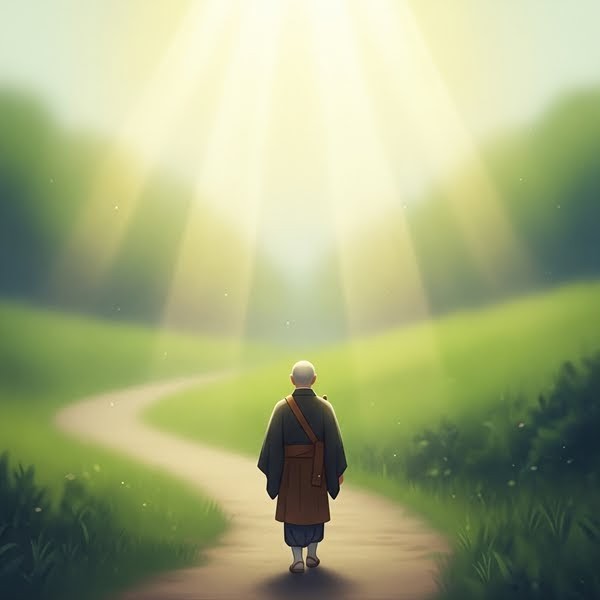
Each of us is gifted with the exact same amount of time. How we live each day, and the accumulation of those choices, directly shapes our entire path from birth to death. Reflecting on this story, the "golf balls" represent the essential questions and values with which we must choose to fill our hearts first. In our Jodo Shinshu tradition, we consider the question "Where do we go when we die?" to be the most crucial matter of life, and we cherish living with this spiritual anchor. The answer we hold is simple: we return to the land of the Buddha. This is the Pure Land—the realm where those we loved who passed before us now dwell, and where we too will surely return. Holding this deep conviction serves as an unwavering compass as we navigate the uncertain paths of life.
Rev. Josuke Inoue (釋 穣信)

Resident Minister, Honpa Hongwanji Mogi das Cruzes

Kaikyoshi — Jodo Shinshu Hongwanji-ha, South America District

↑ Back to index

You Are Not Alone: A Message for Hoonko


You Are Not Alone: A Message for Hoonko

Good afternoon, everyone, and welcome to our Hoonko service here at the Honpa Hongwanji Temple of Mogi das Cruzes. Today we observe Hoonko, a deeply significant day to express our profound gratitude for the teachings of Shinran Shonin. He left us a timeless and comforting message: we are never truly alone. We are continuously connected to all forms of life—past, present, and future.

It is as if we are always accompanied by two sacred presenças: Amida Buddha, who represents boundless compassion, and Shinran Shonin, who guides our daily steps with his wisdom. This temple serves as a sacred space that bridges our world with the spiritual realm, connecting us with those who have passed before us, as well as with our own inner selves. It is a sanctuary for meeting, quiet reflection, and finding true inner peace.

Today, we also assemble to pay loving tribute to those we cherish who are no longer physically with us. The grief of losing a loved one is undeniably deep and painful, yet the teachings of the Buddha offer us immense comfort. The sorrow we experience does not stem from the nature of death itself, but rather from the deep sense of loss and the physical absence we feel in our daily lives.

Those who have departed now rest in perfect peace, embraced by the infinite compassion and mercy of Amida Buddha. As we fondly remember the beautiful moments we shared with them, we find the strength to step forward, knowing with absolute certainty that they are at peace. While death may often seem like a distant event, it is a natural reality that every one of us will face. It is a part of the beautiful cycle of existence.

Amida Buddha warmly embraces everyone with unconditional love—both those who have already departed and those of us who remain here to carry on. Let us place our trust in this boundless wisdom and love. In loving memory of those we hold dear, let us celebrate the gift of life, cherish every precious moment, and walk forward together with hope, kindness, and mutual compassion.

Rev. Josuke Inoue (釋 穣信)

Resident Minister, Honpa Hongwanji Mogi das Cruzes

Kaikyoshi — Jodo Shinshu Hongwanji-ha, South America District

↑ Back to index

Honoring Memory, Illuminating the Way: The Eitaikyo Ceremony


Honoring Memory, Illuminating the Way: The Eitaikyo Ceremony

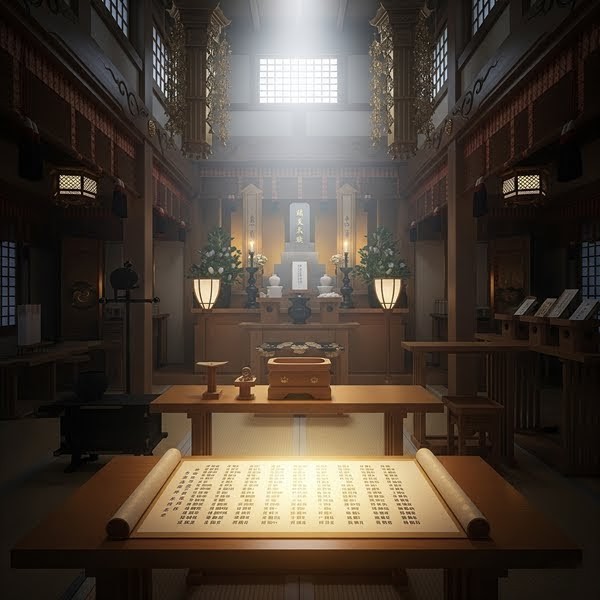
Good afternoon, everyone, and welcome to this Eitaikyo service, our traditional ceremony in loving memory of our departed family members. It is with a heart full of gratitude that we welcome you to our temple today. In this sacred service, we honor those whose names are permanently inscribed in the Eitaikyo ledger, remembering their precious lives and the deep bonds that continue to connect us.

I am certain that each name in this book brings back tender images of your beloved family members. Throughout their lives, they showered us with unconditional love and gifted us with invaluable memories. Although the natural law of impermanence has taken them away from our physical presence, they remain vibrantly alive in our thoughts. Indeed, Eitaikyo is far more than a simple memorial service; it is a vital opportunity to honor their life legacy and transmit their cherished spiritual values to future generations.

We enter this world, meet precious companions, share moments of joy and sorrow, and, inevitably, the time comes for our own departure. However, Buddhism teaches us that physical death is not a cold ending, but a profound transformation. Guided by our encounter with the Dharma in this life, we walk toward Amida Buddha's Pure Land. Inscribing a loved one's name in the Eitaikyo ledger is a beautiful way to express our gratitude while illuminating our own spiritual path.

Some may wonder about the significance of registering a name in this ledger. Allow me to say that this act is a spiritual investment in the future, a testament of love for your children and descendants, and a path toward cultivating lasting inner peace. By inscribing a name, you ensure that your loved ones will be perpetually remembered and honored in this temple, and that their spirits dwell in the absolute peace of the Pure Land.

And for those of us who remain here, strengthened by the Buddha's compassionate teachings, we can continue to live our lives with hope and the joyful certainty that we will meet our loved ones once again. Eitaikyo is a sacred tradition that guarantees your ancestors will be honored continuously, even if a family lineage eventually comes to an end. We believe that the truest memorial lies in our love and sincere intention to keep their memory alive. I warmly invite you to connect deeply with this temple, a sanctuary of peace and comfort. My family and I came to Brazil with the sole purpose of serving this wonderful community. Please feel free to reach out to us; we are always here to listen and support you on your journey. Thank you very much for your presence today.

Rev. Josuke Inoue (釋 穣信)

Resident Minister, Honpa Hongwanji Mogi das Cruzes

Kaikyoshi — Jodo Shinshu Hongwanji-ha, South America District

↑ Back to index

Reflecting on the Connection of Life at the Spring Equinox


Reflecting on the Connection of Life at the Spring Equinox

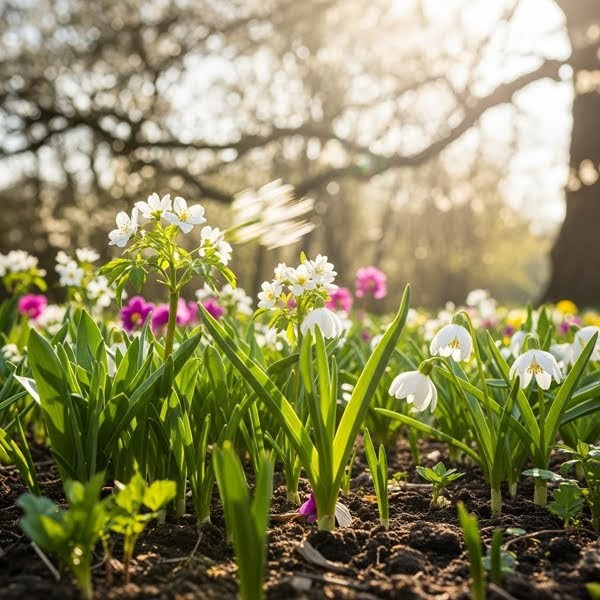
Today, we gather with deep gratitude for our collective memorial service and to celebrate the Spring Equinox. It is a profound joy to meet here together and listen to the compassionate teachings of Amida Buddha. In the gentle warmth of spring, flowers bloom beautifully, birds sing, and all of life awakens. Nature gently reminds us of the constant cycle of existence and how precious it is to live fully within the limited time we are given.

Today is also a sacred day to remember and pay tribute to those who have already departed. The loss of a beloved family member brings a profound sadness and quiet loneliness into our lives. Yet, the path of the Buddha guides us with gentle light to accept and gradually transform this deep sorrow.

Buddhism teaches us the fundamental truth of impermanence: everything in this world is in a state of constant transition, and nothing remains unchanged. We are born, and we must inevitably face death. However, the teachings of the Buddha assure us that physical death is not a final extinction, but rather a new beginning—a birth into the Pure Land.

Through our encounters and farewells with various people along our journey, we awaken to the true preciousness of life and the value of human connection. Even when the physical body passes away, a person's loving thoughts, values, and memories remain vividly alive in our hearts, handed down like an eternal flame of life.

Amida Buddha, with the universal vow to save all beings unconditionally, warmly invites us to the Pure Land. The Pure Land is a realm of absolute peace, completely free from worldly suffering, pain, and grief. Even when we lose our way or struggle in deep sorrow, Amida Buddha never abandons us, watching over our steps with infinite compassion.

And those dear ones who have already left our side are also being guided by Amida Buddha's compassionate light into that same realm of eternal peace.

May the light of Amida Buddha, like the warm rays of spring, reach deep into your hearts and shine upon those who have gone before us. May this spiritual connection bring comfort to your minds, serving as a source of strength for today and a bright hope for tomorrow.

Rev. Josuke Inoue (釋 穣信)

Resident Minister, Honpa Hongwanji Mogi das Cruzes

Kaikyoshi — Jodo Shinshu Hongwanji-ha, South America District

↑ Back to index

Obon: A River of Memories


Obon: A River of Memories

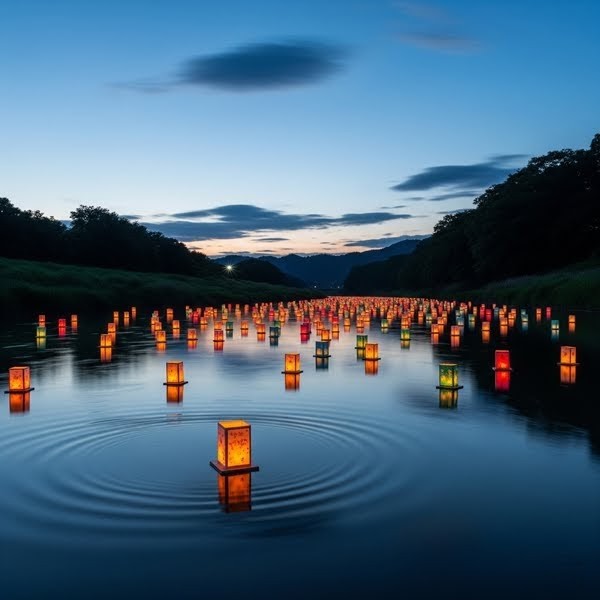
With hearts filled with deep gratitude, we welcome you to our temple today as we gather to celebrate Obon, a tradition of profound beauty and significance. To see you all gathered here, in this distant land we now call home, keeping the memory and love for your ancestors alive in your hearts, fills me with deep emotion.

It is truly moving to witness how the bond with our roots remains unbroken, even so many miles away from Japan. Over the centuries, guided by the solemn and touching verses of the Amida Sutra chanted with such reverence today, Obon has served as a beacon of hope and comfort for our people. It offers us a precious opportunity to celebrate the lives of those who have passed, to recall their unique stories and teachings, and to honor the love that has bound our families across generations. Today, we write another beautiful page of this shared history here in Brazil—a page that does not merely look back at the past, but one that illuminates our path toward the future.

Some might wonder: why must we remember the past? Why is this connection to those who have departed so vital for us today? My dear friends, just as a plant requires deep and strong roots to blossom, we too must nourish our history and origins so that we may grow and flourish as complete, compassionate human beings.

It is easy to view our ancestors and our descendants as separate, distant lives. Yet, the truth is that we are all part of a grand, endless current—a river of life that flows from the past into the future, carrying the collective history of humanity, of our families, and of our people. Within this continuous flow, honoring our ancestors is an act of deep love and hope for future generations. It teaches them the enduring value of family, gratitude, and respect for those who walked before us.

While Obon is celebrated during the warm summer months in Japan, we gather here today in the quiet chill of winter. Yet, despite the differences in climate and geography, the warm atmosphere surrounding this temple remains identical: the familiar aroma of incense, the bittersweet nostalgia that gently warms the heart, and the absolute certainty that neither distance nor time can ever dim the love and gratitude we hold for our departed loved ones.

In our Pure Land teaching of lucid confidence, we recognize that those we love who have passed on have been born anew in the Pure Land, embraced by the compassionate light of Amida Buddha. Sustained by this comforting thought, we assemble today not to lament their absence, but to joyfully celebrate their lives and cherish their memories. As we remember them, feelings of longing or even regret may naturally arise in our hearts—thoughts of wishing we had spent more time together or expressed our love more clearly. But please do not let these feelings become a burden of guilt. They are simply natural reflections of the deep love you carry. Let us transform these emotions into a source of strength, inspiring us to live each day with greater vitality, compassion, and gratitude.

May the memory of our departed loved ones inspire us to become kinder, more understanding, and more present in the lives of those we cherish. Look around this room; each of you carries the legacy and love of someone who has passed. Even in unfamiliar faces, we can perceive the shared presence of loving memories and hope. No one is ever truly alone in this world; we are all interconnected by invisible bonds of love and compassion. May this Obon ceremony bring a profound connection to our roots, family harmony, and a renewal of our shared lucid confidence. May the light of Amida Buddha illuminate our hearts and guide our steps on the path of peace and true happiness.

Rev. Josuke Inoue (釋 穣信)

Resident Minister, Honpa Hongwanji Mogi das Cruzes

Kaikyoshi — Jodo Shinshu Hongwanji-ha, South America District

↑ Back to index

The Smile That Winter Could Not Take Away


The Smile That Winter Could Not Take Away

Good afternoon, everyone. Just as the waters of the dam, visible from this main hall, regain their tranquil beauty on misty winter mornings, may our hearts also find serenity during this season of quiet reflection.

It is not uncommon for us to receive visits at the temple from people carrying heavy hearts. Some years ago, a man who had lost his beloved wife came to seek guidance. Throughout his life, he had worked tirelessly, dedicating himself fully to his career, his local community, and, most of all, to his family.

"When winter arrives, the longing for my wife becomes almost unbearable," he shared, holding back his tears with great difficulty. "She rests beneath the cold, frozen earth, while I am here basking in the warm sunshine... It brings me such profound pain and sorrow."

The minister listened with deep empathy and replied gently: "It is true that your wife is no longer physically by your side. However, the world she loved so dearly and for which she gave her absolute best continues to surround and support you today. Every ray of sunlight, every drop of rain is a part of the life she helped build. Her warm smile has not vanished; it will continue to shine brightly within your heart."

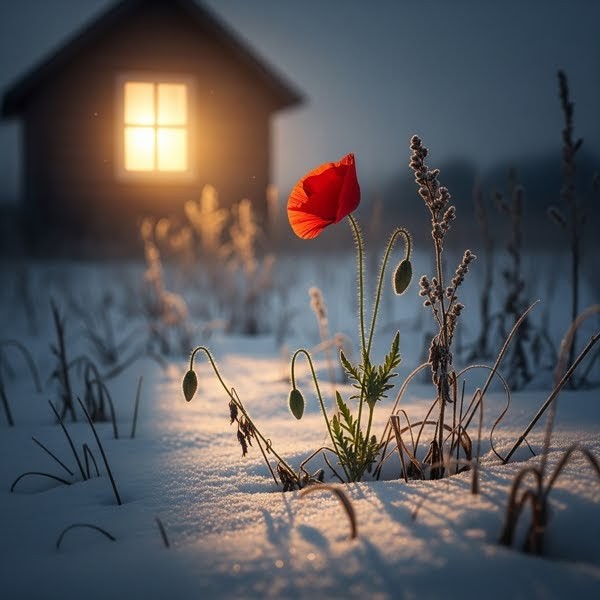
He then shared these words of comfort with him: "Let us root ourselves firmly in the earth and live in harmony with the wind. Let us endure the winter like seeds beneath the soil, and sing of the spring alongside the birds."

Just as a seed silently preserves the promise of new life destined to bloom in the spring, we carry the cherished memories and love of our departed ones deep within us. We must find the spiritual strength to move forward, mirroring the natural world as it regenerates after a harsh winter. The pain of loss is a natural human experience, yet the Buddha's teachings gently remind us: 'It is never too late' to find inner peace. We cannot rewrite the past, but we can transform our future by honoring the legacy of those we loved, choosing to live each day with presence and gratitude.

If you encounter a friend walking through the winter of their grief, let us offer them warm, comforting words. In doing so, we often heal our own hearts as well. Gathering here today to reflect and pray together offers us a precious opportunity to transcend differences in language and culture, sharing our burdens and warming each other's spirits. We hope this temple remains a sanctuary of peace, hope, and shelter for all of you. Through honoring our departed loved ones, may we find the strength to heal and step forward into tomorrow with hope.

Rev. Josuke Inoue (釋 穣信)

Resident Minister, Honpa Hongwanji Mogi das Cruzes

Kaikyoshi — Jodo Shinshu Hongwanji-ha, South America District

↑ Back to index

The Nobility of the Human Spirit


The Nobility of the Human Spirit

Good afternoon, everyone. A very warm welcome to you all. Today, we gather here to pay tribute to the Japanese immigrants who journeyed from Japan to make Brazil their new home. Our ancestors made the monumental decision to leave their beloved homeland and carry their families to an unfamiliar land. This single, courageous decision has fundamentally shaped the essence of our lives today.

In our modern, highly materialistic society, religious activities can easily be perceived as practical wastes of time and unnecessary financial expenses. However, the true essence of religion does not lie in the material realm; it is an act of finding deep value in our "spiritual" nature. We must never forget that it is precisely because we believe in a realm of absolute peace where our departed loved ones dwell in comfort that we are able to live our lives in this world with reassurance and peace of mind. Some speak of heaven and hell after death. Perhaps, from a purely physical standpoint, nothingness awaits. Yet, it is deeply right and compassionate to wish that those who were precious to us do not simply vanish into nothingness, but instead continue to dwell in eternal comfort and peace.

The nobility of the human spirit and soul is not measured by the mere amount of hardships we have endured. Rather, it is determined by how deeply we can share in the sorrows of others. This ultimate empathy is the very heart of the Buddha, which we call "compassion" (Omoiyari). Choosing to align our hearts with the compassion of the Buddha may sound simple, but it requires enough spiritual energy to transform the entire direction of our lives. Yet, because of this profound transformation, it stands as a noble endeavor worthy of our absolute commitment. How much time do we have left in this transient life? I sincerely hope we all awaken as soon as possible to a life filled with mutual compassion, thereby preserving our true human dignity.

Rev. Josuke Inoue (釋 穣信)

Resident Minister, Honpa Hongwanji Mogi das Cruzes

Kaikyoshi — Jodo Shinshu Hongwanji-ha, South America District

↑ Back to index

Encounters and Farewells: Reflections on Happiness


Encounters and Farewells: Reflections on Happiness

Good afternoon, everyone. Welcome to our May memorial service. Currently, we have listed the names of 193 departed family members on our temple website for this month. However, we know there are many others who have passed away whose names have not yet been registered with us. Indeed, outside of our temple, countless individuals around the globe leave this world every single day. Yet, we must remember that for every departure, there is a birth. For a single life to begin, there must be the meeting of two parents, who in turn had parents of their own. Our lives are woven from an infinite web of connections. In this way, human existence is comprised of countless encounters, and an equal number of farewells.

Today's service at our Hongwanji temple celebrates the birth of Shinran Shonin, the founder of Jodo Shinshu. Along with honoring the birth of our revered teacher, let us reflect together on the nature of our lives. If someone were to ask you, "Are you happy?", how would you respond? While it may be difficult to say you are outright unhappy, it can be equally challenging to declare with absolute certainty that you are happy. I would like to share a perspective on how we measure human happiness:

- If you live in a house with a roof, windows, and light, you are among the wealthiest 25% of the world's population.
- If you have the time and financial means to enjoy personal hobbies, you are among the wealthiest 13% of the world's population.
- Being alive today means we are living in the "future" that tens of thousands of those who passed before us could only dream of.
- If you can read or listen to these words today, you are more fortunate than three billion people who cannot see, read, write, or access information and education.

Our lives are not meant to be spent merely lamenting pain and sorrow. They are meant to be an opportunity to open our eyes to the countless blessings and reasons for gratitude that surround us. What are your thoughts on this? In Buddhism, we view worldly happiness as a temporary state that will eventually change. Rather than happiness itself, it is our deep attachment to a happy status quo and our constant fear of losing it that constitutes a fundamental source of suffering. However, the reverse is also true: it reminds us that whatever hardships or misfortunes we face today, they too will not last forever. For this reason, our founder, Shinran Shonin, strictly cautioned against seeking material wealth and social success as the ultimate source of truth.

Thanks to the immense hardships faced by our ancestors, modern society has made it incredibly easy to acquire various material comforts. For those of us living in such an age of abundance, what is truly essential is cultivating a spacious mind—one that can genuinely rejoice in the happiness of others, free from self-centered anxiety over our own fortunes. Shinran Shonin found the ultimate salvation of our lives in the infinite compassion of Amida Buddha. True compassion means experiencing the sorrow of others as our own. He taught the vital importance of sharing joy and cherishing harmony with the entire world. The temple stands here today because this noble spirit has been preserved and passed down through generations of Japanese immigrants. It is with this same aspiration that I have come to this land with my family, seeking to transmit these values to the next generation. I thank you deeply for your continued support.

Rev. Josuke Inoue (釋 穣信)

Resident Minister, Honpa Hongwanji Mogi das Cruzes

Kaikyoshi — Jodo Shinshu Hongwanji-ha, South America District

↑ Back to index

Two Lights on the Path of Life: Shakyamuni Buddha and Amida Nyorai


Two Lights on the Path of Life: Shakyamuni Buddha and Amida Nyorai

Just like driving at night, life places us on an uncertain road where every forward step can feel unsettling. To travel safely through the darkness, we require two distinct lights: one to illuminate our immediate steps, and another to light up the distant horizon. In a car, the headlights perform this dual task, guiding us safely to our destination without stumbling. In the journey of life, our inner strength multiplies when we walk hand in hand. In Jodo Shinshu Buddhism, we are guided by two Buddhas who illuminate our way: Shakyamuni Buddha, who lights our immediate steps, and Amida Nyorai, who radiates light upon our ultimate, distant destination.

When we recite "Namu Amida Butsu," the distant realm of the Pure Land becomes a vivid reality, illuminating the very present moments we live. United in this shared path, our flame of devotion intensifies, guiding us forward with stability. Although each of us must walk our own unique path, our final destination is the same Pure Land. Today, we celebrate the birth of Shakyamuni Buddha, who gifted us the spiritual compass to navigate life safely, step by step, toward genuine peace.

Shakyamuni Buddha revealed the root causes of our human suffering and showed us the path to true liberation, teaching us to live with deep wisdom and compassion. By following his teachings, our path becomes clear and a profound joy reveals itself. With boundless compassion, Amida Nyorai dedicated eons of contemplation to the salvation of all beings. Through the Nembutsu, Amida Buddha invites us unconditionally to the Pure Land, a realm of eternal peace and ultimate fulfillment.

In our shared lucid confidence, we find a warm spiritual community that welcomes and strengthens us. Walking side by side, we encourage and inspire one another, making this earthly journey lighter and more luminous. Celebrating the birth of the Buddha is an expression of profound gratitude for his infinite wisdom. Embracing his teachings and contributing to the happiness of others is the most sublime way to repay his benevolence.

Just as headlights guide a vehicle through the dark, Shakyamuni Buddha and Amida Buddha illuminate our lives. United in lucid confidence, with hearts overflowing with gratitude, we celebrate this special day and renew our spirits to continue walking a path of harmony, peace, and spiritual realization.

Rev. Josuke Inoue (釋 穣信)

Resident Minister, Honpa Hongwanji Mogi das Cruzes

Kaikyoshi — Jodo Shinshu Hongwanji-ha, South America District

↑ Back to index

Ohigan: Reflections on Life and Death


Ohigan: Reflections on Life and Death

Good afternoon, everyone! A warm welcome to all of you today. Ohigan is a highly significant event held during the transitional periods of the seasons. Although the summer heat still lingers, Ohigan offers us a precious opportunity to reflect deeply on our own lives and the lives of our beloved ones who have passed before us. With modern scientific and technological breakthroughs, medicine and engineering have advanced to the point where prosthetics and assistive devices can gracefully support physical limitations. However, what truly awaits us after death?

From a purely scientific standpoint, our thoughts, consciousness, and memories cease to exist when we die, leaving only our physical bones behind. The word "Higan" translates to "the other shore," metaphorically describing the world beyond this life. It is possible that nothingness lies ahead, as no living person can describe the afterlife with absolute certainty. Most people naturally hope to be liberated from worldly suffering and find peaceful rest. Yet, when we lose someone we deeply cherish, our perspective shifts. It is entirely natural to wish for their continued happiness and peace even after they have departed.

Because the notion of absolute extinction is deeply sorrowful, ancient generations envisioned realms of gods and Buddhas. They sought a sacred place where, alongside eternal beings, their deep connections and love could endure forever. A single human life is indeed fleeting when placed against the vast backdrop of the universe and history—like a single grain of sand carried away by the wind. Nevertheless, the spiritual hope of being embraced by an "eternal presence" grants us the strength to live fully. Where are our loved ones now? In Jodo Shinshu, we entrust them to the path where those who pass away are born as Buddhas in the Pure Land. By reciting the Nembutsu (Namandabu), we voice our heartfelt wish to be reunited one day with our family members who have become Buddhas. Ohigan is a sacred time to direct our thoughts to those who shaped us, and to re-examine our own path. Today, you gathered at the temple to express your deep gratitude to your ancestors and departed loved ones. Thank you very much.

Rev. Josuke Inoue (釋 穣信)

Resident Minister, Honpa Hongwanji Mogi das Cruzes

Kaikyoshi — Jodo Shinshu Hongwanji-ha, South America District

↑ Back to index

Trusting Someone: Embracing Misunderstandings and Vulnerability


Trusting Someone: Embracing Misunderstandings and Vulnerability

We often talk about "believing in" or "trusting" someone. In many cases, however, we are not actually trusting the person as they are; rather, we are placing excessive expectations on an idealized image we have constructed of them. When we feel betrayed because our expectations were not met, it is usually not that the other person betrayed us, but simply that they did not possess the specific character or ability we assumed they had. We have merely witnessed a previously hidden side of that person. True trust begins when, upon seeing this new side, we can accept it, thinking, "Ah, so this is also a part of who they are."

When we arbitrarily define our impressions of others and things do not go as planned, we easily lose ourselves in the dense forest of human relations. Cultivating a firm, unshakable inner core is incredibly difficult. Because we feel anxious and insecure, we speak of "trusting" as a way to cling to our own idealized success or to a perfect projection of someone else. However, leaning heavily on another person often means placing a one-sided burden on them. While relying on others can feel easy and comfortable for us, the person supporting us must work many times harder. This is not genuine trust; it is the imposing of excessive expectations. In Buddhism, we call these selfish attachments "blind passions" (Bonno).

Our founder, Shinran Shonin, spoke of trust in this profound way: "Even if I were to fall into hell as a result of chanting the Nembutsu taught by Honen Shonin, I would have no regrets. This is because, no matter how hard I try, I am completely incapable of reaching the Pure Land through my own self-powered efforts. If I were capable of reaching the Pure Land on my own merit, and yet fell into hell because I trusted the Nembutsu, only then could I say I was deceived. But since hell is my only destination anyway, I choose to recite the Nembutsu, trusting my revered teacher's words." In other words, to truly trust someone means being willing to accept whatever misunderstandings, deceptions, or harms may arise from them. Is this not precisely the nature of the trust between a parent and a child? For us, as Shinran Shonin teaches, Amida Buddha is the ultimate, trustworthy presence we can rely upon wholeheartedly.

Rev. Josuke Inoue (釋 穣信)

Resident Minister, Honpa Hongwanji Mogi das Cruzes

Kaikyoshi — Jodo Shinshu Hongwanji-ha, South America District

↑ Back to index

The Essence of an "Important" Person: Caring for Others with Humility


The Essence of an "Important" Person: Caring for Others with Humility

How is everyone doing? Welcome to our temple today. On our website, we display the names of your precious family members who have passed away, along with their memorial dates. If you wish to add a name, there is no need for complicated paperwork; please simply send the name and date via WhatsApp, and we will add it promptly. These names will remain on our site as an enduring testament to their lives for as long as this temple stands. We encourage you to share this page with your relatives so that many may remember them.

Now, let us transition to our usual Dharma talk. Today, I would like to reflect on what it truly means to be an "important" person. In Ginza, Tokyo's most bustling district, there are countless sushi restaurants, ranging from highly exclusive venues to affordable yet delicious shops. Do you like sushi? While sushi is world-famous, its true essence lies in Japanese culinary artistry—selecting the finest seasonal fish, preparing it to maximize its natural flavors, and presenting it with the perfect beverage.

Naturally, one might think that a cheap and delicious place is always the best choice. Yet, some people repeatedly visit ultra-expensive sushi establishments where reservations are nearly impossible to secure and a single meal can cost thousands of reals. In some circles, those who can walk into these exclusive restaurants at any time without a reservation are called "important people." But is that really so? Eating at an expensive restaurant does not inherently make someone noble or important. That would be a superficial way of thinking.

In reality, customers who frequent these high-end shops do not act superior just because they pay a high price. Instead, they often bring exquisite regional sweets or unique gifts from outside Tokyo for the chefs. Despite being paying customers, they remain humble, showing deep respect for the chef’s craftsmanship to cultivate a mutual relationship of respect. In return, the chefs naturally utilize their utmost skills to provide the absolute best hospitality for these loyal patrons, especially during slow seasons when their support keeps the business thriving. Here, the chef prepares the finest ingredients without worrying about the cost, solely to ensure the guest's joy. This reveals that a truly important person is "one who can remain humble and genuinely care for others."

While this is a secular example, how does this concept apply to the spiritual realm of the Dharma? Amida Buddha extends a hand of ultimate compassion to guide us to our final destination. This boundless grace is what our founder, Shinran Shonin, praised as unequaled. How do we receive this outstretched hand? Unlike an exclusive restaurant that requires expensive gifts and status, Shinran Shonin showed us a path where, through the simple recitation of the Nembutsu, anyone can receive the highest mercy, regardless of their standing.

Reflecting on this, we find that although the world has many diverse religions, their core ethical teachings are remarkably similar. Most can be distilled into three universal guidelines: do not kill, do not steal, and do not lie. Though scriptures and deities differ, every major religious tradition prioritizes the fundamental rules necessary for human survival and social harmony. Not everyone needs to become a Buddhist, but striving to be a better human being is essential for us all. I deeply respect your noble habit of taking time to honor your ancestors, and I hope we can continue to cherish these essential human values together. The temple is a sanctuary for this shared reflection.

Recently, our mother temple in Kyoto requested aid donations for the victims of the Ishikawa earthquake in the Hokuriku region. If you are able to offer even a small contribution, we would be deeply grateful. The donations collected across Brazil will be gathered at the São Paulo temple and sent directly to Japan. Thank you very much for your continuous kindness and support.

Rev. Josuke Inoue (釋 穣信)

Resident Minister, Honpa Hongwanji Mogi das Cruzes

Kaikyoshi — Jodo Shinshu Hongwanji-ha, South America District

↑ Back to index


Contato
Templo Honpa Hongwanji de Mogi das Cruzes
    
Rua Padre Albino Bareta, 01 - Parque das Varinhas
Mog das Cruzes, SP - Brasil
CEP08753-340
Tel:(11)4799-0530

47654975000105

Source / 思想ソース